
Enhancing AI Safety: Improving Adversarial Robustness in Vision Language Models

The Research Question

How can we improve the adversarial robustness of Vision Language Models (VLMs) to ensure their safe deployment in critical applications? This question drives our exploration into focused adversarial training techniques that improve the security of these models without excessive computational costs.

Adversarial Robustness and AI Safety

Adversarial attacks involve subtle manipulations of input data designed to deceive machine learning models into making incorrect predictions. In the context of VLMs, these attacks can have severe implications, especially when these models are deployed in sensitive areas such as autonomous driving, healthcare, and content moderation.

Enhancing the adversarial robustness of VLMs is crucial for AI safety. Robust models can withstand adversarial inputs, ensuring reliable performance and preventing malicious exploitation. Our research focuses on a novel approach to achieve this robustness by selectively re-training components of the multimodal architecture.

Our Approach

Traditional methods to improve model robustness often involve adversarial training, which integrates adversarial examples into the training process. However, this can be computationally intensive, particularly for complex models like VLMs that process images and text.

Our study introduces a more efficient strategy: adversarially re-training only the language model component of the VLM. This targeted approach leverages the Fast Gradient Sign Method (FGSM) to generate adversarial examples and incorporates them into the training of the text decoder. We maintain computational efficiency by keeping the image encoder fixed while significantly enhancing the model’s overall robustness.

Key Findings

  1. Adversarial Training Efficiency: Adversarially re-training only the language model yields robustness comparable to full adversarial training, with reduced computational demands.
  2. Selective Training Impact: Freezing the image encoder and focusing on the text decoder maintains high performance and robustness. In contrast, training only the image encoder results in a significant performance drop.
  3. Benchmark Results: Experiments on the Flickr8k and COCO datasets demonstrate that our selective adversarial training approach effectively mitigates the impact of adversarial attacks, as evidenced by improved BLEU scores and model performance under adversarial conditions.

Implications for Ethical AI

Our findings support the development of more robust and secure AI systems, which is crucial for ethical AI deployment. By focusing on adversarial robustness, we contribute to the broader goal of AI safety, ensuring that multimodal models can be trusted in real-world applications.

For a detailed exploration of our methodology and findings, read the full paper pre-print: https://arxiv.org/abs/2407.21174

References

  • Rashid, M.B., & Rivas, P. (2024). AI Safety in Practice: Enhancing Adversarial Robustness in Multimodal Image Captioning. 3rd Workshop on Ethical Artificial Intelligence: Methods and Applications, ACM SIGKDD’24. https://arxiv.org/abs/2407.21174

About the Author

Maisha Binte Rashid is a Ph.D. student at Baylor University, specializing in AI safety and multimodal machine learning.

Standard IEEE 7014


Sharing that IEEE 7014-2024: IEEE Standard for Ethical Considerations in Emulated Empathy in Autonomous and Intelligent Systems has been published!

This standard is the result of five years of dedication and collaboration by a diverse group of global experts, and Dr. Rivas has contributed at different stages. The journey was marked by passionate discussions, varied perspectives, and a unified goal of fostering ethical and responsible AI development.

As AI technology becomes increasingly powerful and integral to our daily lives, IEEE 7014-2024 represents a crucial step towards ensuring that these systems are developed with ethical considerations at the forefront.

Accessing the Standard

The full text of IEEE 7014-2024 can be viewed and purchased here: IEEE 7014. Additionally, free access may soon be available via the IEEE GET Program: IEEE GET Program, although this is currently to be confirmed.

Acknowledgments

A huge thank you to Ben Bland and all the wonderful people who contributed to this project. We worked together to reach a consensus and have made a significant contribution to the future of AI technology.

This publication is a testament to the power of collaboration and the shared vision of building a brighter technological future for humanity and our planet.

Final Thoughts

The publication of IEEE 7014-2024 is a proud moment for all who have been involved, including our very own Dr. Rivas. It underscores the importance of considering ethical implications in AI development and sets a precedent for future advancements in the field. We look forward to seeing how this standard will influence the development of AI systems that are not only intelligent but also empathetic and ethically sound.


Uncovering Patterns in Car Parts – A Step Towards Combating a Cybercrime

The black market for stolen car parts is a significant problem, exacerbated by the rise of online marketplaces like Craigslist or OfferUp, where stolen goods are often sold under the radar. In response to this growing issue, our research team at Baylor University has been leveraging cutting-edge AI techniques to detect patterns in car part sales that could signal illicit activity. This work is part of the NSF-funded Research Experiences for Undergraduates (REU) program, which provides undergraduate students with hands-on research experience in critical areas like artificial intelligence. Our project, supported by NSF Grant #2210091, investigates the potential of deep learning models to analyze vast amounts of data from online listings, offering a new tool in the fight against stolen car parts.

Why This Research Matters

The theft and resale of car parts not only affect vehicle owners but also contribute to organized crime. Detecting patterns in how stolen parts are sold online can help law enforcement track and dismantle these criminal networks. This project also presents a unique challenge to the AI research community: the complexity of analyzing unstructured, noisy data from real-world platforms. By utilizing the Vision Transformer (ViT) for image analysis, our research offers a different approach compared to previous works that employed multimodal models like ImageBind and OpenFlamingo.

Dataset and Embedding Extraction

Our dataset comprises thousands of car parts advertisements scraped from Craigslist and OfferUp, each including images and textual descriptions. To process the image data, we used the Vision Transformer (ViT), a model pre-trained on ImageNet-21k. ViT processes images by splitting them into 16×16-pixel patches, allowing for the extraction of key features from each image. These features were converted into embeddings—high-dimensional vectors that represent each image’s content in a form that the model can analyze.

We extracted embeddings for nearly 85,000 images, which were then compiled into a CSV file for further analysis, including clustering and visualization. Unlike prior works by Hamara & Rivas (2024) and Rashid & Rivas (2024), which utilized multimodal models like ImageBind and OpenFlamingo to fuse image and text data, we focused solely on image embeddings in this phase to assess the effectiveness of ViT in capturing visual patterns related to illicit activities.

Clustering and Evaluation

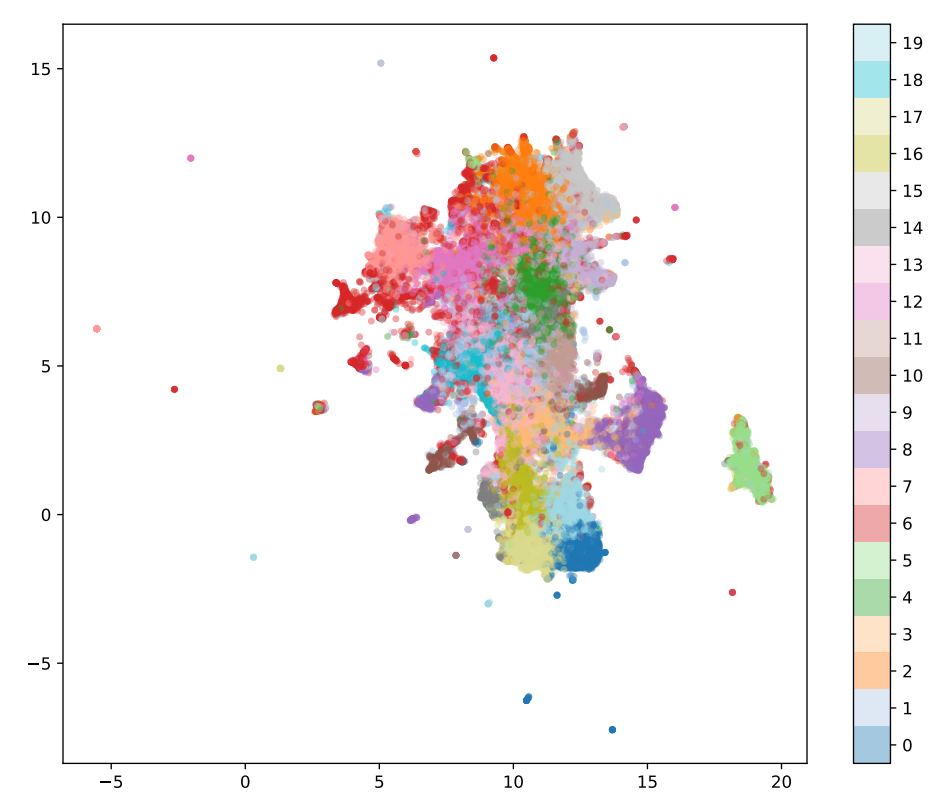
With the embeddings extracted, we used UMAP (Uniform Manifold Approximation and Projection) to project the high-dimensional data into a more interpretable 2D space for visualization. We then applied K-Means clustering, a widely used algorithm for grouping data, and experimented with different embedding dimensions—16, 32, 64, and 128—to identify the optimal number of clusters.

Among these, 64 dimensions proved to be the best suited for our dataset, as determined by three key clustering performance metrics:

  • Silhouette Score: Measures how similar an object is to its own cluster compared to other clusters. A value of 0.015 indicated that some clusters were poorly defined.
  • Calinski-Harabasz Index: Evaluates the variance ratio between clusters versus within clusters.
  • Davies-Bouldin Index: Measures the average similarity between each cluster and its most similar cluster.

Although 128 dimensions performed well in some tests, 64 dimensions provided the clearest balance between cluster purity and computational efficiency. The low silhouette score, while indicating some overlap between clusters, helped confirm that most clusters were well-defined, despite several outliers—posts that displayed mixed or unclear features, such as images showing both powertrains and vehicle exteriors.

Findings and Analysis

Using the K-Means algorithm, we identified 20 distinct clusters, each representing different categories of car parts. Here are some key findings:

  • Cluster 0: Primarily contained exterior shots of full vehicles.
  • Cluster 1: Featured exterior components like mirrors and bumpers.
  • Cluster 2: Focused on powertrain parts such as engines and transmissions.
  • Cluster 3: Showcased body panels including doors, trunks, and hoods.
  • Cluster 4: Grouped images of towing accessories like trailer hitches.

After clustering, we applied K-Nearest Neighbors (KNN) to identify the top 10 posts nearest to each cluster centroid, which allowed us to analyze representative posts and confirm the coherence of each cluster. Despite the general success of this approach, outliers emerged in the UMAP visualization, indicating the need for further refinement to handle posts with mixed features. This challenge is common in image analysis, particularly when models rely solely on visual data without the contextual information that multimodal models can provide.

UMAP Visualization for 64 dimensions

Comparative Analysis with Prior Work

Our approach contrasts with that of Hamara & Rivas (2024) and Rashid & Rivas (2024), who utilized multimodal models like ImageBind and OpenFlamingo to integrate image and text data for enhanced analysis. While their methods leveraged the fusion of multiple data types to capture richer context, we aimed to assess the capabilities of ViT in isolating visual patterns indicative of illicit activity. This comparison highlights the trade-offs between focusing on single-modality models versus multimodal approaches in detecting complex patterns within unstructured data.

Broader Impact

This research demonstrates the potential of AI in analyzing large, unstructured datasets from online marketplaces, providing law enforcement with new tools to monitor and track stolen car parts. From a technical perspective, our project highlights the effectiveness of using ViT for image analysis in this context. As we continue refining our models and consider integrating multimodal approaches inspired by prior work, our collaboration with crosdisciplinary partners will ensure that this system becomes a valuable tool for combating the sale of stolen goods online.

As stated previously, the silhouette score for the dataset proved to be notably small, which was supported by the visualization containing numerous outliers. This may be attributed to clusters lacking clear definition, meaning that several posts contained images without many distinguishable features. This is understandable considering that while clusters emphasized a focus on specific car parts, many images still displayed various other vehicle components. For instance, although Cluster 2 primarily featured images of powertrains, the posts in this cluster also included shots of the exterior and body panels of the vehicle. This is logical as sellers often aim to showcase multiple facets of the vehicle when listing it, explaining the lack of focus on specific car parts.

About the Author

Cameron Armijo is a Computer Science undergraduate student at Baylor University, specializing in data mining.

International Conference on Emergent and Quantum Technologies (ICEQT’24)

July 22-25, 2024 — Las Vegas, NV

Dear Esteemed Colleagues,


Quantum computing is an expeditiously evolving field of interdisciplinary research, drawing upon fundamental principles from mathematics, physics, and engineering. To maintain scientific rigor and foster advancement, this domain necessitates a collaborative effort across various STEM disciplines.

We are delighted to announce the International Conference on Emergent and Quantum Technologies (ICEQT’24), scheduled for July 22-25, 2024, in Las Vegas, NV. The conference is designed to serve as a platform for researchers specializing in quantum machine learning and machine learning professionals exploring the application of AI in enhancing quantum computing algorithms. It aims to facilitate the exchange of insights and developments within these dynamic areas of study.

The burgeoning interest among machine learning practitioners in leveraging AI for quantum computing endeavors, and vice versa, underscores the relevance of this conference. Thus, we warmly welcome the submission of original research papers that contribute novel insights and state-of-the-art developments in the following areas of interest:

Foundations of Quantum Computing and Quantum Machine Learning

  • Quantum computing models and paradigms, e.g., Grover, Shor, and others
  • Quantum algorithms for Linear Systems of Equations
  • Quantum Tensor Networks and their Applications in QML

Quantum Machine Learning Algorithms

  • Quantum Neural Networks
  • Quantum Hidden Markov Models
  • Quantum PCA
  • Quantum SVM
  • Quantum Autoencoders
  • Quantum Transfer Learning
  • Quantum Boltzmann machines
  • Theory of Quantum-enhanced Machine Learning

AI for Quantum Computing

  • Machine learning for improved quantum algorithm performance
  • Machine learning for quantum control
  • Machine learning for building better quantum hardware

Quantum Algorithms and Applications

  • Quantum computing: models and paradigms
  • Quantum algorithms for hyperparameter tuning (Quantum computing for AutoML)
  • Quantum-enhanced Reinforcement Learning
  • Quantum Annealing
  • Quantum Sampling
  • Applications of Quantum Machine Learning

Fairness and Ethics in Quantum Machine Learning

We look forward to receiving your submissions and to welcoming you to ICEQT’24.

All submissions that are accepted for presentation will be included in the proceedings published by IEEE CPS. To ensure consistency in formatting, authors should follow the general typesetting instructions available on the IEEE’s website, including single-line spacing and a 2-column format. Additionally, authors of accepted papers must agree to the IEEE CPS standard statement regarding copyrights and policies on electronic dissemination.

Prospective authors are encouraged to submit their papers through the conference’s evaluation website at CMT. More information about the conference, including submission guidelines, can be found on our website at https://baylor.ai/iceqt/.

Important Deadlines

March 22, 2024: Submission of papers: https://cmt3.research.microsoft.com/ICEQT2024
– Full/Regular Research Papers (maximum of 8 pages)
– Short Research Papers (maximum of 5 pages)
– Abstract/Poster Papers (maximum of 3 pages)

April 15, 2024: Notification of acceptance (+/- two days)

May 1, 2024: Final papers + Registration

June 21, 2024: Last day for hotel room reservation at a discounted price.

July 22-25, 2024: The 2024 World Congress in Computer Science, Computer Engineering, and Applied Computing (CSCE’24: USA)
Which includes the International Conference on Emergent and Quantum Technologies (ICEQT’24)

Chairs:
Pablo Rivas, PhD, Baylor University
Bikram Khanal, PhD Candidate, Baylor University

Celebrating Love and Innovation at The Lab: Welcome, PoderOso!

This Valentine’s Day at Baylor.AI, we’re not just celebrating love in the air but also the arrival of our latest powerhouse, affectionately named PoderOso. This state-of-the-art equipment is a testament to the unwavering support and vision of Dr. Greg Hamerly, the department chair of Computer Science at Baylor, and Dr. Daniel Pack, the dean of the School of Engineering and Computer Science. Their dedication to advancing research and innovation within our department has been instrumental in acquiring PoderOso, and for that, we are profoundly grateful.

The name ‘PoderOso’ is derived from Spanish, where ‘Poder’ means ‘Power’ and ‘Oso’ means ‘Bear’. Combined, ‘Poderoso’ translates to ‘Powerful’. Therefore, ‘PoderOso’ creatively merges these concepts to symbolize something that embodies both power and the strength of a bear, aptly reflecting the capabilities of machine.

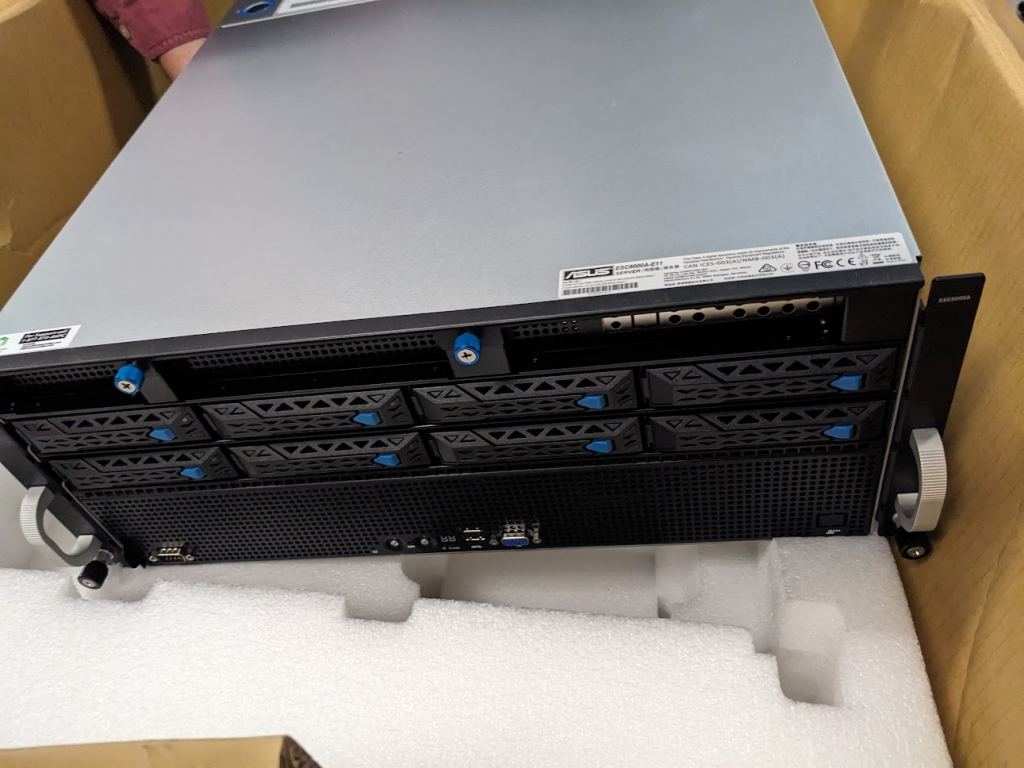
PoderOso is a technological marvel boasting dual EPYC 7662 processors, a whopping 1024GB of DDR4-3200 ECC memory, cutting-edge storage solutions, and six NVIDIA L40S GPUs. It’s a beast designed for in-house AI research, setting a new benchmark for what we can achieve.

With PoderOso’s impressive specs, our team is poised to push the boundaries of deep learning faster than ever before. From advancing language models that can understand and generate human-like text to developing computer vision systems that can perceive the world as we do; from enhancing adversarial robustness to securing AI against malicious attacks to exploring the burgeoning field of quantum machine learning and driving forward multimodal AI research that integrates multiple types of data, PoderOso will be at the heart of our endeavors. Moreover, it will enable us to delve deeper into AI ethics, ensuring our advancements are aligned with our values and societal needs.

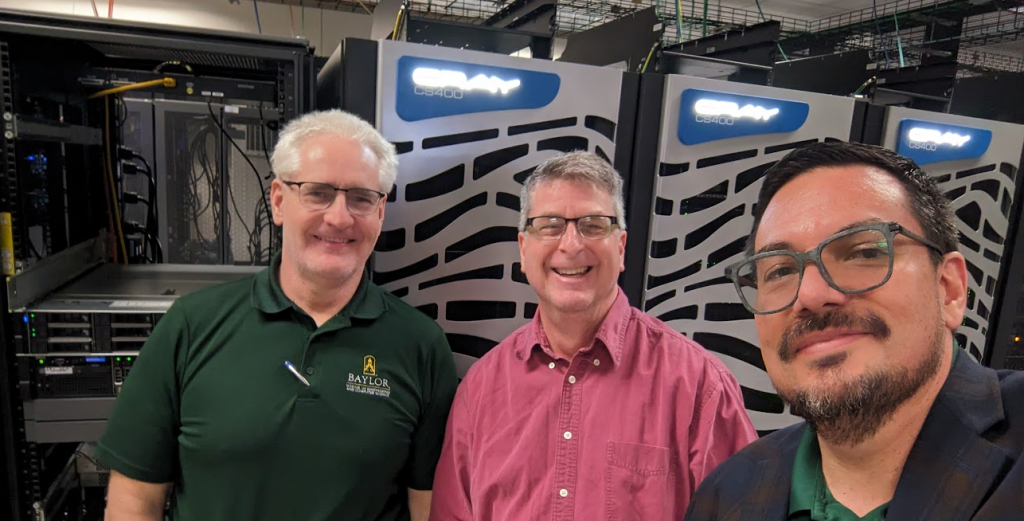
As we unbox PoderOso and get it up and running, we’re filled with anticipation for future breakthroughs. Below are photos of the unboxing and our dedicated IT team in front of the rack.

Our journey into the next frontier of AI research has just gotten a significant boost, thanks to PoderOso and the incredible support of our leaders. Here’s to a future where our research leads to technological advancements and fosters a more ethical, understanding, and inclusive world.

Happy Valentine’s Day to our Baylor.AI family and everyone supporting us on this exciting journey!

(Left to right) Brian Sitton, Mike Hutcheson, Pablo Rivas

A Unified Framework for Fair Counterfactual Explanations: Benchmarking, Scalability, and Human‑Centric Design

We propose a unified evaluation framework for counterfactual explanations that balances fairness, plausibility, and scalability, and we outline next steps for research and practice.

In this work, we combine a systematic mapping of existing literature with a concrete benchmark suite. Our goal is to make counterfactual explanations both fair and actionable across high‑dimensional, real‑world domains.

TL;DR

  • We introduce a unified evaluation framework that simultaneously measures plausibility, actionability, and legal compliance of counterfactual explanations.
  • Our benchmark suite covers large‑scale, high‑dimensional datasets (e.g., Lending Club, HMDA, KKBox) and demonstrates that current methods struggle with scalability and causal validity.
  • The framework emphasizes human‑in‑the‑loop assessment, causal grounding, and open‑source tooling to bridge research and industry.

Why it matters

Machine‑learning models increasingly drive decisions about credit, hiring, health care, and criminal justice. When a model denies a loan or predicts a high risk score, affected individuals often request an explanation. Counterfactual explanations answer the question “What would need to change for a different outcome?” While attractive, existing methods use ad‑hoc metrics, such as sparsity or proximity, that are hard to compare across domains. Without a common yardstick, we cannot reliably assess whether an explanation is fair, plausible, or legally compliant (e.g., under the GDPR’s “right‑to‑explanation”). Moreover, many approaches ignore the causal structure of the data, leading to explanations that suggest impossible or socially undesirable changes. Finally, many counterfactual generators are designed for low‑dimensional toy data and collapse when applied to real‑world, high‑dimensional workloads.

How it works

Our approach proceeds in three stages.

  1. Systematic literature mapping. We performed a systematic mapping study (SMS) of peer‑reviewed papers, industry reports, and open‑source toolkits that discuss bias detection, fairness metrics, and counterfactual generation. This gave us a consolidated view of which methods exist, what datasets they have been tested on, and which fairness notions they address.
  2. Construction of a unified metric suite. Building on the discussion points identified in the literature, we defined three orthogonal axes:
    • Plausibility: does the suggested change respect real‑world domain constraints?
    • Actionability: can a user realistically achieve the suggested change?
    • Legal compliance: does the explanation satisfy GDPR‑style minimal disclosure requirements?

    Each axis aggregates several concrete measures (e.g., feasibility checks, causal consistency tests, and robustness to distribution shift) that have been repeatedly highlighted across the surveyed papers.

  3. Benchmark suite and open‑source integration. We assembled a set of widely used, high‑dimensional datasets, Adult, German Credit, HMDA, Lending Club, and KKBox, and wrapped them in a reproducible pipeline that evaluates any counterfactual generator on all three axes. The suite is released under a permissive license and directly plugs into existing fairness toolkits such as AI Fairness 360.

What we found

Applying our framework to a representative sample of ten counterfactual generation techniques revealed consistent patterns:

  • Unified metrics are missing. No prior work reported all three axes together; most papers focused on either sparsity or statistical fairness alone.
  • Scalability is limited. Optimization‑based approaches that work on the Adult dataset (≈30 K rows, 14 features) become infeasible on Lending Club (> 2 M rows, > 100 features) without dimensionality‑reduction tricks.
  • Causal grounding is rare. Only a small minority of methods explicitly encode causal graphs; the majority treat features as independent, which leads to implausible suggestions (e.g., decreasing age while increasing income).
  • Human evaluation is under‑explored. Few studies incorporated user‑centric metrics such as trust or perceived fairness, despite repeated calls in the literature for human‑in‑the‑loop design.
  • Open‑source tooling is fragmented. Toolkits like AI Fairness 360 provide bias metrics but lack integrated counterfactual generators; conversely, counterfactual libraries focus on explanation generation but not on fairness assessment.

These findings motivate the need for a single, extensible benchmark that can be used by researchers to compare methods and by practitioners to validate deployments.

Limits and next steps

Our study has several limitations that also point to promising research directions.

  • Dataset concentration. Most benchmark datasets are classic tabular collections (Adult, German Credit, HMDA). While they span finance, health, and criminal justice, additional domains such as education or environmental policy remain under‑represented.
  • Causal knowledge acquisition. We assume that a causal graph can be obtained from domain experts or from causal discovery algorithms. In practice, constructing accurate causal models at scale is still an open problem.
  • Dynamic real‑world environments. Our benchmark captures static snapshots of data. Future work should test explanations under distribution shift and over time, as highlighted by robustness‑to‑distribution‑shift concerns.
  • Human‑centered evaluation. Our current human‑in‑the‑loop studies are limited to small user studies. Scaling user feedback to millions of decisions will require novel crowdsourcing or interactive UI designs.

To address these gaps we propose the following next steps:

  1. Expand the benchmark to include under‑explored domains (e.g., sustainability, public policy) and multimodal data (text, images).
  2. Develop hybrid methods that combine optimization‑based counterfactual generation with causal constraints, reducing implausible suggestions.
  3. Integrate the benchmark into existing fairness toolkits (AI Fairness 360, What‑If Tool) to provide a one‑stop shop for fairness‑aware explanation evaluation.
  4. Design large‑scale user studies that measure trust, perceived fairness, and actionable insight across diverse stakeholder groups.

FAQ

What is a counterfactual explanation?
A counterfactual explanation describes the minimal changes to an input that would flip the model’s prediction, answering “What if …?” for the user.
Why do we need a unified framework?
Existing works evaluate explanations with disparate metrics, making it impossible to compare fairness, plausibility, and legal compliance across methods or domains.
Can my model’s explanations be legally compliant without a causal model?
Legal requirements such as GDPR emphasize that explanations should reflect realistic, causally possible changes. Ignoring causality can lead to implausible or misleading counterfactuals, risking non‑compliance.
How does the framework handle high‑dimensional data?
We include scalability tests that measure runtime and memory on datasets with hundreds of features. Our results show that many current methods need dimensionality‑reduction or approximation to remain tractable.

Read the paper

For the full technical details, benchmark specifications, and exhaustive literature review, please consult the original publication.

Jui, T. D., & Rivas, P. (2024). Fairness issues, current approaches, and challenges in machine learning models. International Journal of Machine Learning and Cybernetics, 1–31. Download PDF

Creation and Analysis of an NLU Dataset for DoD Cybersecurity Policies

Comprehending and implementing robust policies is crucial in cybersecurity. In our lab, Ernesto Quevedo et al. recently released a paper, Creation and Analysis of a Natural Language Understanding Dataset for DoD Cybersecurity Policies (CSIAC-DoDIN V1.0), which introduces a groundbreaking dataset to aid in this endeavor. This dataset bridges a significant gap in Legal Natural Language Processing (NLP) by providing structured data specifically focused on cybersecurity policies.

Dataset Overview

The CSIAC-DoDIN V1.0 dataset encompasses a wide array of cybersecurity-related policies, responsibilities, and procedures from the Department of Defense (DoD). Unlike existing datasets that focus primarily on privacy policies, this dataset includes detailed guidelines, strategies, and procedures essential for cybersecurity.

Key Contributions

  1. Novel Dataset: This dataset is the first to include comprehensive cybersecurity policies, guidelines, and procedures.
  2. Baseline Models: The paper provides baseline performance metrics using transformer-based models such as BERT, RoBERTa, Legal-BERT, and PrivBERT.
  3. Open Access: The dataset and code are publicly available, encouraging further research and collaboration.

Experiments and Results

Our team of researchers evaluated several transformer-based models on this dataset:

  • BERT: Demonstrated strong performance across various tasks.
  • RoBERTa: Showed competitive results, particularly in classification tasks.
  • Legal-BERT: Excelled in domain-specific tasks, benefiting from its legal data pre-training.
  • PrivBERT: Provided insights into the transferability of models across different policy subdomains.

Download

Access the CSIAC-DoDIN V1.0 dataset here to explore it and contribute to the advancement of Legal NLP. Join the effort to enhance cybersecurity policy understanding and implementation using cutting-edge NLP models. Download the paper here to learn more about the process.

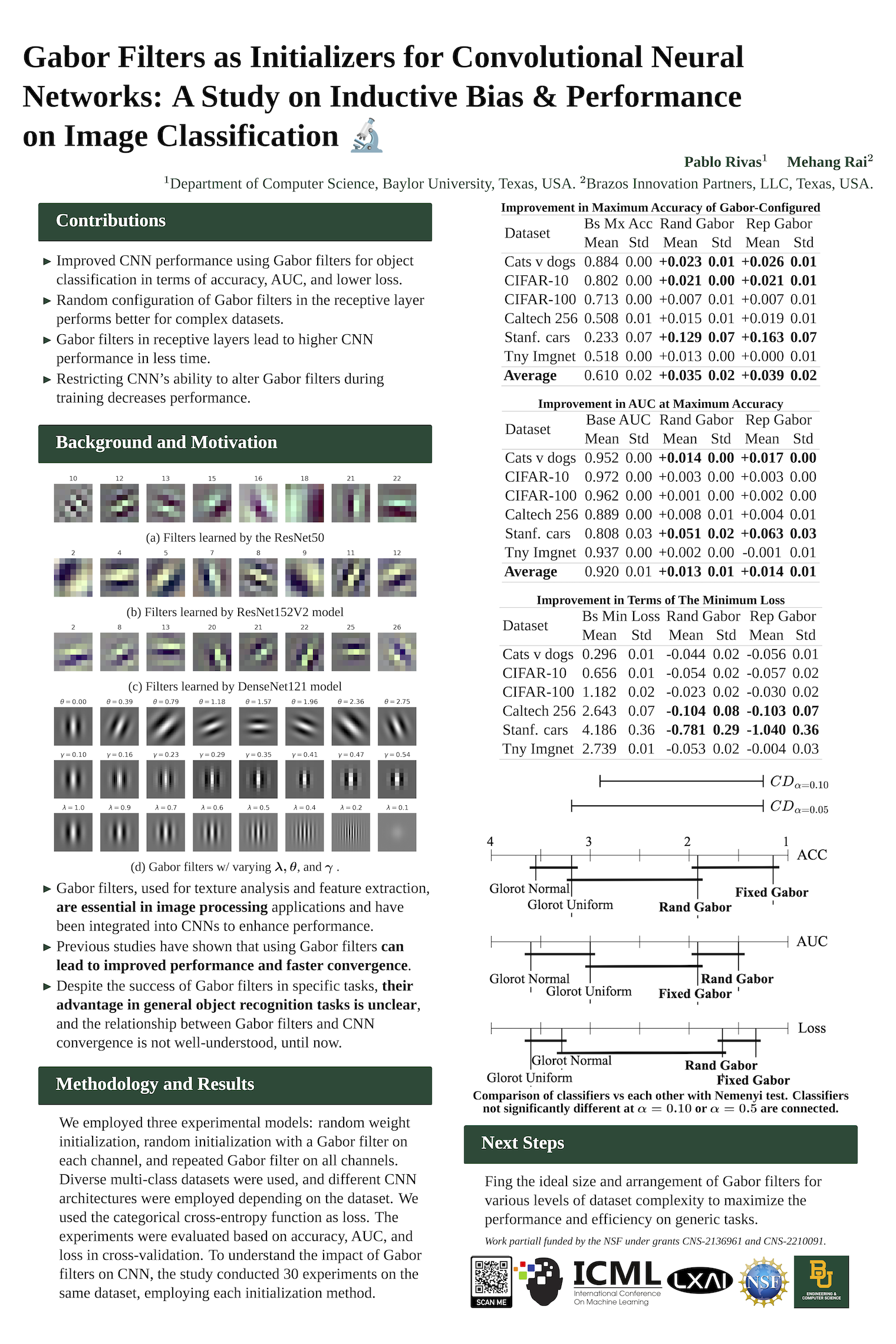
Gabor Filters as Initializers for Convolutional Neural Networks: A Study on Inductive Bias and Performance on Image Classification

Rivas, Pablo, and Mehang Rai. 2023. “Enhancing CNNs Performance on Object Recognition Tasks with Gabor Initialization” Electronics 12, no. 19: 4072. https://doi.org/10.3390/electronics12194072

Our latest journal article, authored by Baylor graduate and former Baylor.AI lab member Mehang Rai, MS, marks an advancement in Convolutional Neural Networks (CNNs). The paper, titled “Enhancing CNNs Performance on Object Recognition Tasks with Gabor Initialization,” has not only garnered attention in academic circles but also achieved the prestigious Best Poster Award at the LXAI workshop at ICML 2023, a top-tier conference in the field.

Pablo Rivas and Mehang Rai, ” Gabor Filters as Initializers for Convolutional Neural Networks: A Study on Inductive Bias and Performance on Image Classification “, in The LXAI Workshop @ International Conference on Machine Learning (ICML 2023), 7/2023.

A Journey from Concept to Recognition Our journey with this research began with early discussions and progress shared here. The idea was simple yet profound: exploring the potential of Gabor filters, known for their exceptional feature extraction capabilities, in enhancing the performance of CNNs for object recognition tasks. This exploration led to a comprehensive study comparing the performance of Gabor-initialized CNNs against traditional CNNs with random initialization across six object recognition datasets.

Key Findings and Contributions The results were fascinating to us. The Gabor-initialized CNNs consistently outperformed traditional models in accuracy, area under the curve, minimum loss, and convergence speed. These findings provide robust evidence in favor of using Gabor-based methods for initializing the receptive fields of CNN architectures, a technique that was explored before with little success because researchers had been constraining Gabor filters during training, precluding gradient descent to optimize the filters as needed for general purpose object recognition, until now.

Our research contributes significantly to the field by demonstrating:

  1. Improved performance in object classification tasks with Gabor-initialized CNNs.
  2. Superior performance of random configurations of Gabor filters in the receptive layer, especially with complex datasets.
  3. Enhanced performance of CNNs in a shorter time frame when incorporating Gabor filters.

Implications and Future Directions This study reaffirms the historical success of Gabor filters in image processing and opens new avenues for their application in modern CNN architectures. The impact of this research is vast, suggesting potential enhancements in various applications of CNNs, from medical imaging to autonomous vehicles.

As we celebrate this achievement, we also look forward to further research. Future studies could explore initializing other vision architectures, such as Vision Transformers (ViTs), with Gabor filters.

It’s a proud moment for us at the lab to see our research recognized on a global platform like ICML 2023 and published in a journal. This accomplishment is a testament to our commitment to pushing the boundaries of AI and ML research. We congratulate Mehang Rai for this remarkable achievement and thank the AI community for their continued support and recognition.

Understanding the Executive Order on AI: Implications for the Industry and Academia

The White House recently released an executive order titled “Executive Order on the Safe, Secure, and Trustworthy Development and Use of Artificial Intelligence.” This directive aims to establish a framework for the responsible development and deployment of AI technologies in the United States. Here are a few key takeaways from this order and its implications for the AI industry and academic researchers.

1. What does this EO mean for the AI industry?

  • Regulatory Framework: The order emphasizes establishing a regulatory framework that ensures the safe and responsible development of AI. Companies must adhere to specific standards and best practices when developing and deploying AI technologies.
  • Transparency and Accountability: The industry is encouraged to adopt transparent methodologies and ensure that AI systems are explainable. This will likely lead to a surge in demand for tools and solutions that offer transparency in AI operations.
  • Collaboration with Federal Agencies: The order promotes cooperation between the private sector and federal agencies. This collaboration fosters innovation while ensuring AI technologies align with national interests and security.
  • Risk Management: Companies are urged to adopt risk management practices that identify and mitigate potential threats AI systems pose. This includes addressing biases, ensuring data privacy, and safeguarding against malicious uses of AI.

At the CRAIG/CSEAI, we’re committed to assisting industry and government partners in navigating this intricate AI regulatory terrain through our research, assessments, and training. Contact us to know more.

2. What does the EO mean for academics doing AI research?

  • Research Funding: The order highlights the importance of federal funding for AI research. Academics can expect increased support and resources for projects that align with the order’s objectives, especially those focusing on safety, security, and trustworthiness.
  • Ethical Considerations: Given the emphasis on trustworthy AI, researchers will be encouraged to incorporate ethical considerations into their work. This aligns with the growing movement towards AI ethics in the academic community.
  • Collaboration Opportunities: The directive promotes collaboration between academia and federal agencies. This could lead to new research opportunities, partnerships, and access to resources that were previously unavailable.
  • Publication and Transparency: The order underscores the importance of transparency in AI research. Academics will be encouraged to publish their findings, methodologies, and datasets to promote openness and reproducibility in the field.

The “Executive Order on the Safe, Secure, and Trustworthy Development and Use of Artificial Intelligence” is a significant step towards ensuring that AI technologies are developed and used responsibly. Both the AI industry and academic researchers have a pivotal role to play in realizing the order’s objectives. This order is, in part, a follow-up on prior white house’s effort to promote responsible AI.

Evaluating Robustness of Reconstruction Models with Adversarial Networks

K. Sooksatra, G. Bejarano, and P. Rivas, “Evaluating Robustness of Reconstruction Models with Adversarial Networks,” Procedia Computer Science, vol. 222, pp. 353-366, 2023. https://doi.org/10.1016/j.procs.2023.08.174.

In the ever-evolving landscape of artificial intelligence, our lab has made a significant breakthrough with our latest publication featured in Procedia Computer Science. This research, spearheaded by Korn Sooksatra, delves into the critical domain of adversarial robustness, mainly focusing on reconstruction models, which, until now, have been a less explored facet of adversarial research. This paper was accepted initially into IJCNN and chosen to be added to the INNS workshop and published as a journal article.

Key Takeaways:

  1. Innovative Frameworks: The team introduced two novel frameworks for assessing adversarial robustness: the standard framework, which perturbs input images to deceive reconstruction models, and the universal-attack framework, which generates adversarial perturbations from a dataset’s distribution.
  2. Outperforming Benchmarks: Through rigorous testing on MNIST and Cropped Yale Face datasets, these frameworks demonstrated superior performance in altering image reconstruction and classification, surpassing existing state-of-the-art adversarial attacks.
  3. Enhancing Model Resilience: A pivotal aspect of the study was using these frameworks to retrain reconstruction models, significantly improving their defense against adversarial perturbations and showcasing an ethical application of adversarial networks.
  4. Latent Space Analysis: The research also included a thorough examination of the latent space, ensuring that adversarial attacks do not compromise the underlying features that are crucial for reconstruction integrity.

Broader Impact:

The implications of this research are profound for the AI community. It not only presents a method to evaluate and enhance the robustness of reconstruction models but also opens avenues for applying these frameworks to other image-to-image applications. The lab’s work is a call to the AI research community to prioritize the development of robust AI systems that can withstand adversarial threats, ensuring the security and reliability of AI applications across various domains.

Future Directions:

While the frameworks developed are groundbreaking, the team acknowledges the need for reduced preprocessing time to enhance practicality. Future work aims to refine these frameworks and extend their application to other domains, such as video keypoint interpretation, anomaly detection, and graph prediction.

The result of our standard framework without the discriminator on the left is from the VAE, and on the right is from the VAEGAN. The images 1) in the first column are clean; 2) in the second column are the reconstructed images for the images in the first column; 3) in the third column are adversarial examples concerning the images in the first column; 4) in the last column are the reconstructed images for the adversarial examples.