


logo

Conference

We look forward to meeting you!

#ICEQT

This conference consists of sessions with invited presenters in the field of emergent and quantum technologies. Our sessions are dedicated to presenting the papers submitted for the conference and accepted for the oral presentation. There will also be an online/remote and poster session which will give an opportunity to present and discuss the best research works accepted for the conference.

Presentations

The participants get access to a wide variety of talks in different disciplines.

Keynote Speakers

Top researchers and technologists are invited to speak at the plenary sessions.

Networking

talk about the recent progress in emergent and quantum technologies and possible future research directions

PROGRAM

Quantum-related presentations are listed below in chronological order. All dates and times are in U.S. Pacific Time. Recorded and other non-timed presentations follow the live schedule.

MONDAY, JULY 20, 2026

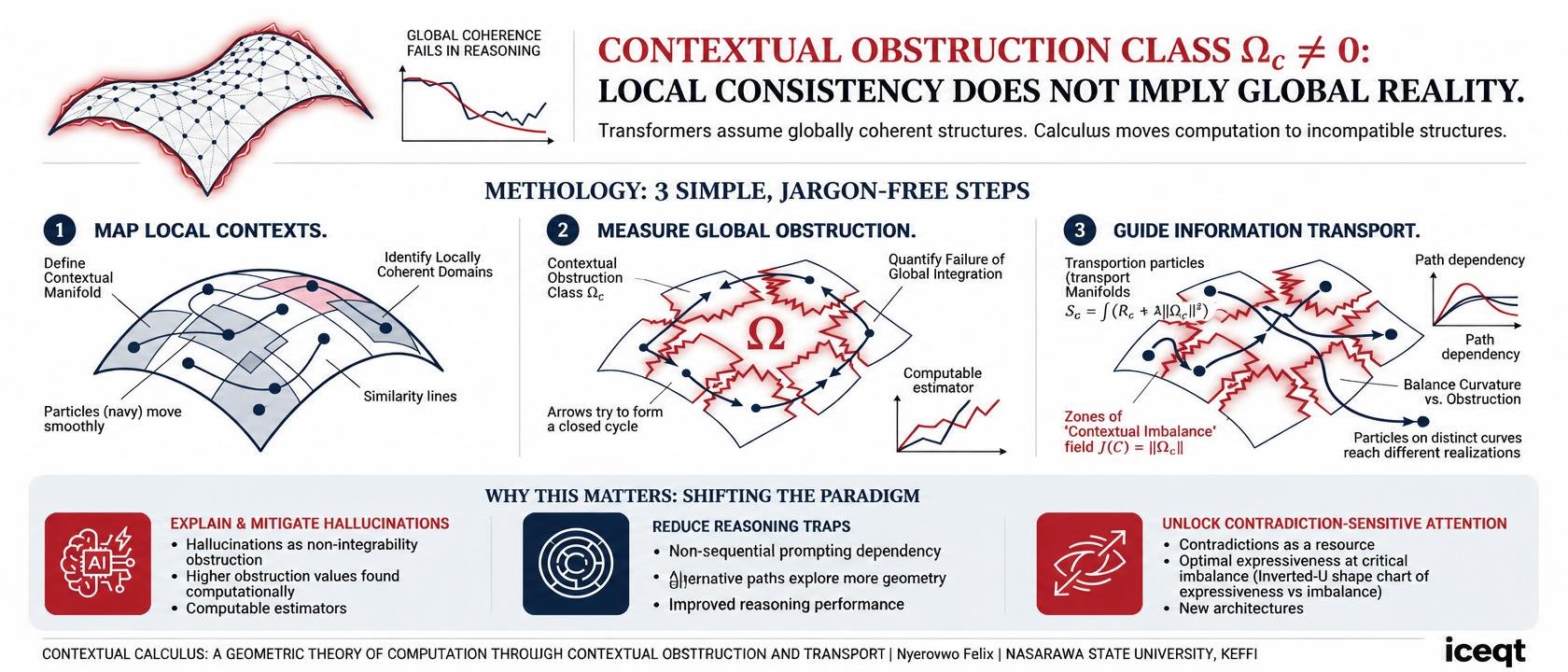
Contextual Calculus: A Geometric Theory of Computation Through Contextual Obstruction and Transport

Felix Wejeyan — HashTagPrograms Technology Limited

ICE7407 · Zoom · Session 2-ZOOM · ICAI, ICEQT, and IKE

Graphical abstract pending

Hybrid Quantum Neural Networks For ECG Classification

Shijun Tang, Sihai Tang
Department of Computer Science, Schreiner University, Kerrville, Texas, USA

Zoom · Session 5-ZOOM · ICDATA, BIOENG, ICEQT, and ESCS

Graphical abstract pending

Network of Quantum Support Vector Machines

Emre Tokgoz, Sharmendra Desiboyina
State University of New York, Farmingdale, New York, USA;
Clark University, Worcester, Massachusetts, USA

Zoom · Session 5-ZOOM · ICDATA, BIOENG, ICEQT, and ESCS

TUESDAY, JULY 21, 2026

Graphical abstract pending

Quantum-Accelerated Simulation of Granular Terrains via Koopman-von Neumann Mechanics

Jeremy Mange, Paramsothy Jayakumar
US Army DEVCOM – Ground Vehicle Systems Center, Warren, Michigan, USA

Poster Session · Galleria Ballrooms B & C
The official program gives a poster-session window rather than an individual presentation time.

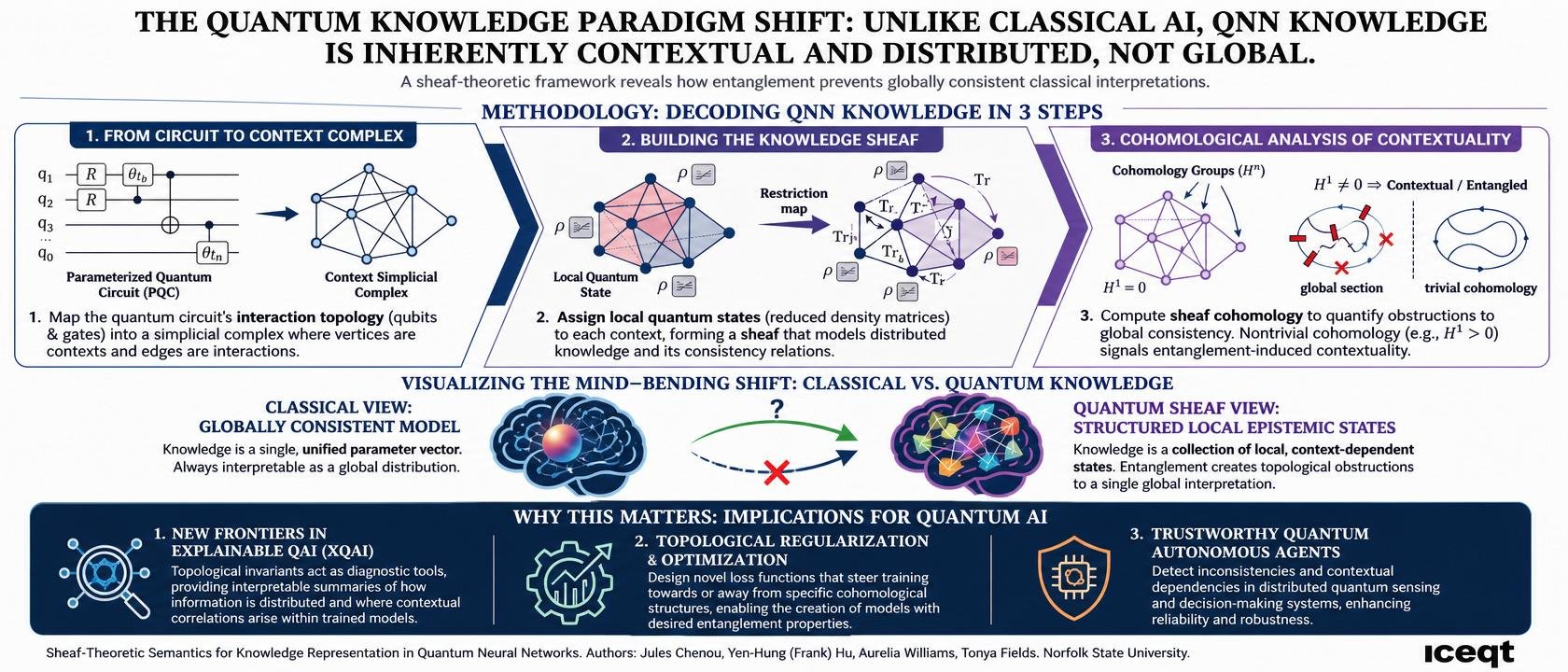
Sheaf-Theoretic Semantics for Knowledge Representation in Quantum Neural Networks

Jules Chenou, Yen-Hung (Frank) Hu, Aurelia Williams, Tonya Fields
Norfolk State University

ICE2596 · On Site · Galleria Ballrooms D & E · Session 9-TUE-DE · ICEQT and FECS

WEDNESDAY, JULY 22, 2026

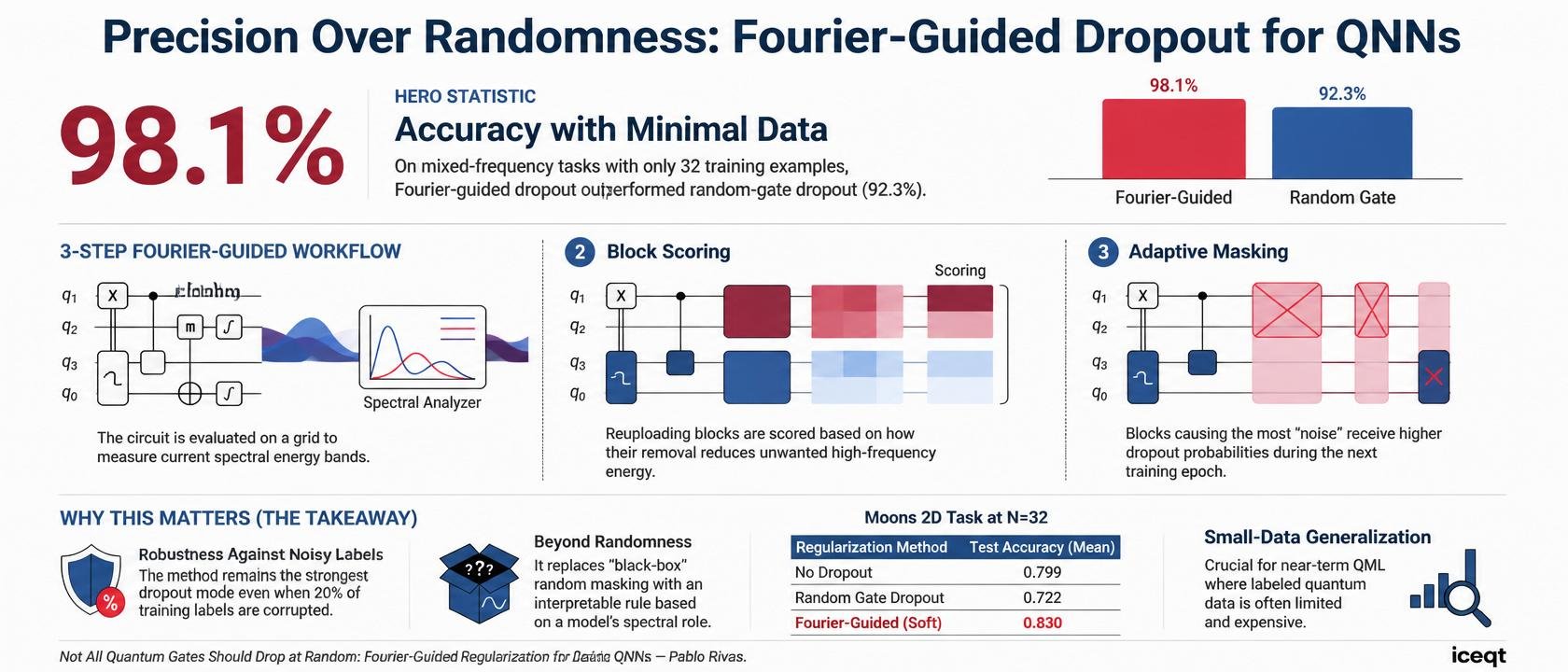
Not All Quantum Gates Should Drop at Random: Fourier-Guided Regularization for Data-Reuploading QNNs

Pablo Rivas
Department of Computing Technology, School of Computer Science and Mathematics, Marist University, Poughkeepsie, New York, USA

ICE2645 · On Site · Galleria Ballrooms D & E · Session 15-WED-DE · ICEQT and ICAI

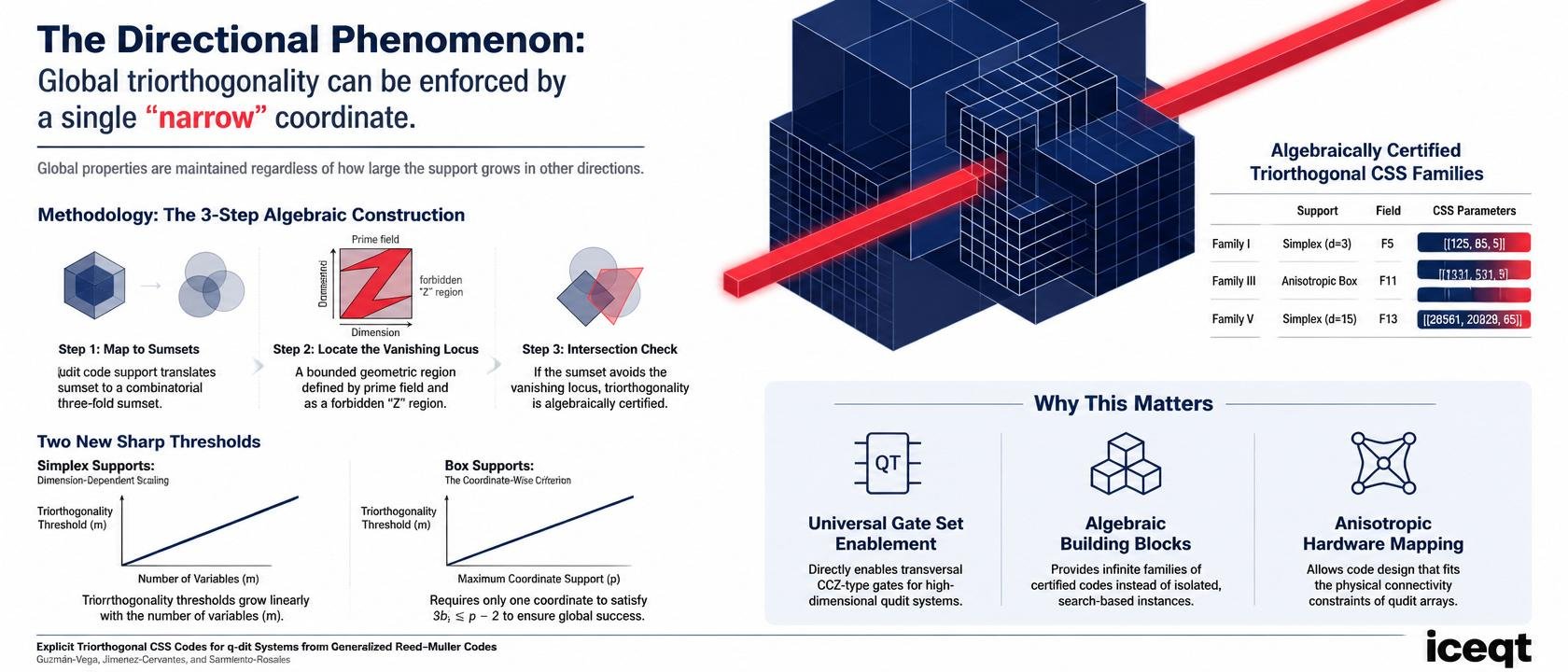
Explicit Triorthogonal CSS Codes for q-dit Systems from Generalized Reed-Muller Codes

José Alberto Guzman Vega — Instituto Politécnico Nacional
Eliseo Sarmiento-Rosales — Instituto Politécnico Nacional
Juan Jiménez-Cervantes — Instituto Politécnico Nacional

ICE7402 · On Site · Galleria Ballrooms D & E · Session 15-WED-DE · ICEQT and ICAI

THURSDAY, JULY 23, 2026

Graphical abstract pending

Analysis of Multivariate Signature Candidates in NIST PQC Standardization Process

Ventura Sarasa Laborda, Luis Hernandez Alvarez, Luis Hernandez Encinas, Araceli Queiruga Dios
Department of Applied Mathematics, Universidad de Salamanca, Salamanca, Spain;
Institute of Physical and Information Technologies (ITEFI), Spanish National Research Council (CSIC), Madrid, Spain

On Site · Galleria Ballrooms D & E · Session 22-THU-DE · SAM

RECORDED AND NON-TIMED PRESENTATIONS

The following papers have no timed live slot in the current official program. Confirmed recorded presentations are identified below.

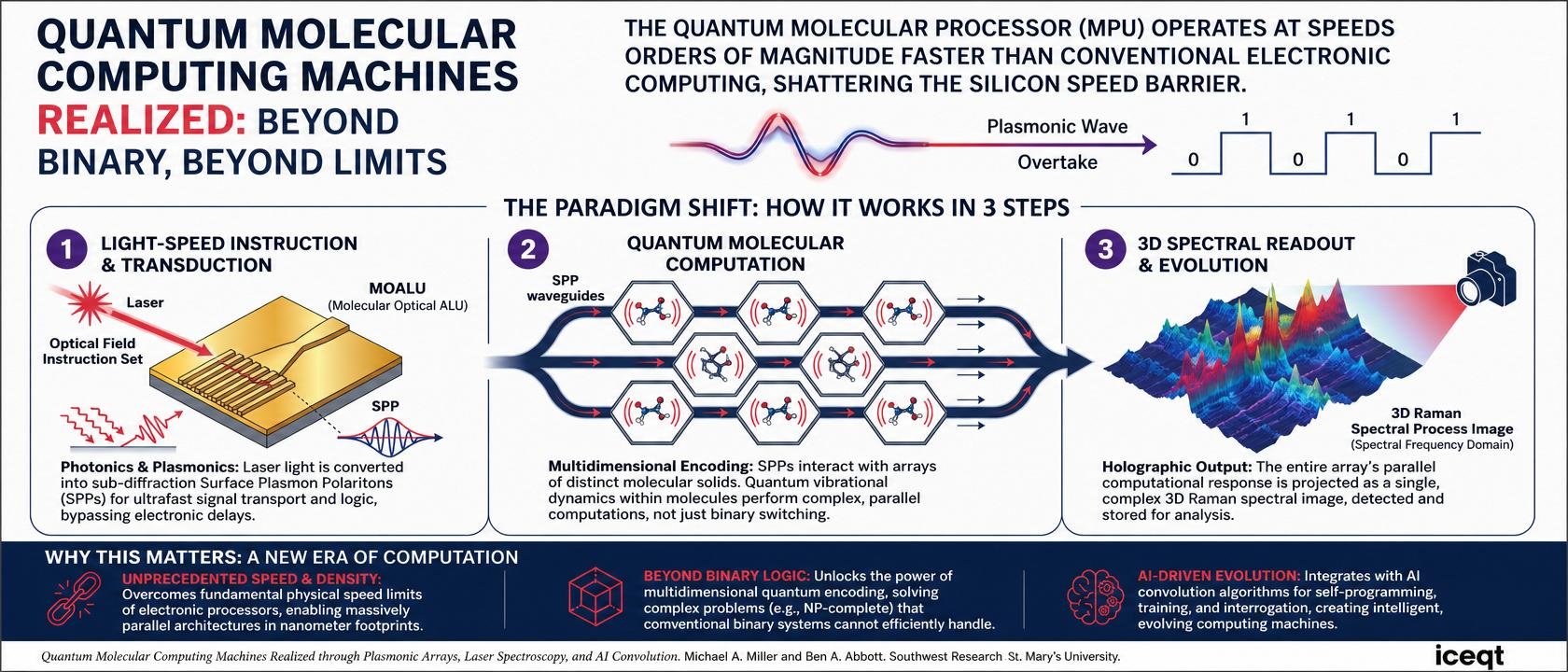
Quantum Molecular Computing Machines Realized through Plasmonic Arrays, Laser Spectroscopy, and AI Convolution

Michael Miller — Southwest Research Institute

ICE7408 · Official non-timed program listing

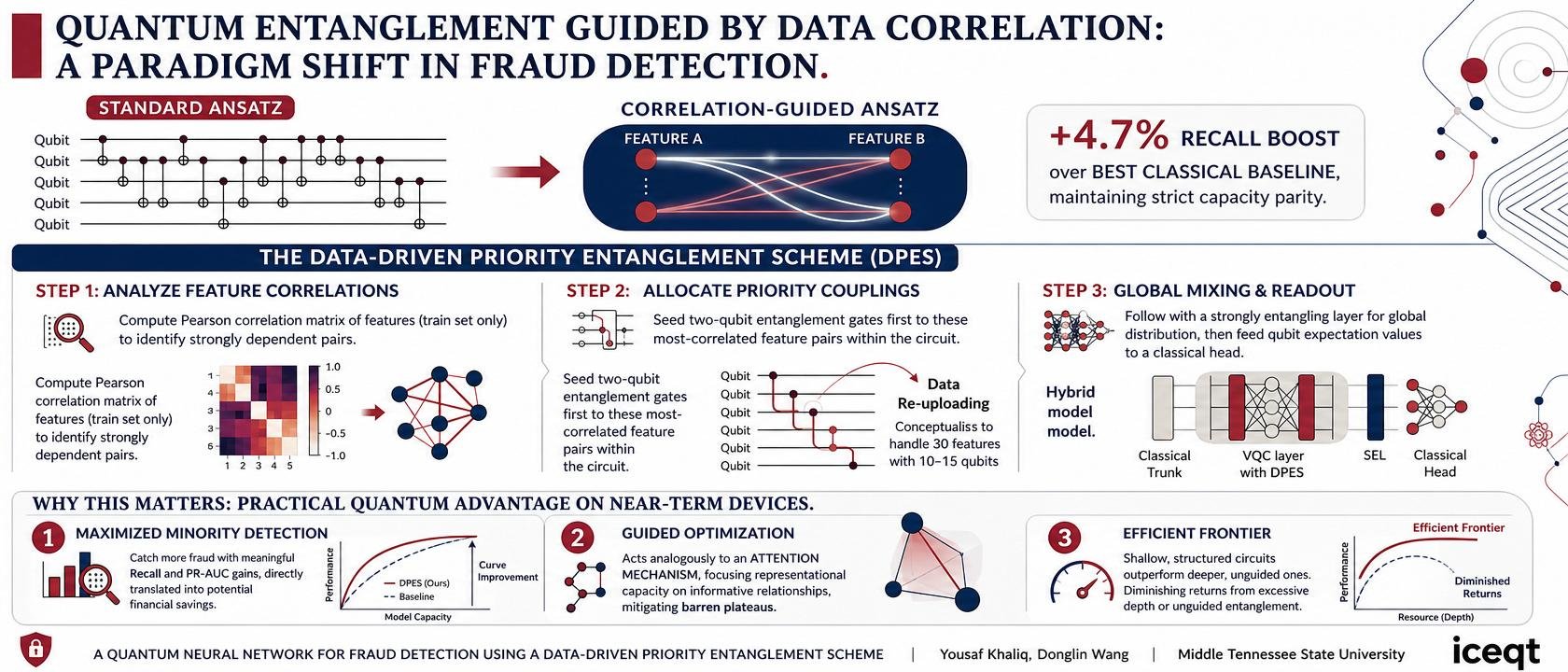
A Quantum Neural Network for Fraud Detection Using a Data-Driven Priority Entanglement Scheme

Yousaf A. Khaliq, Donglin Wang
Computational and Data Science Program, Middle Tennessee State University, Murfreesboro, Tennessee, USA

ICE2531 · Official non-timed program listing

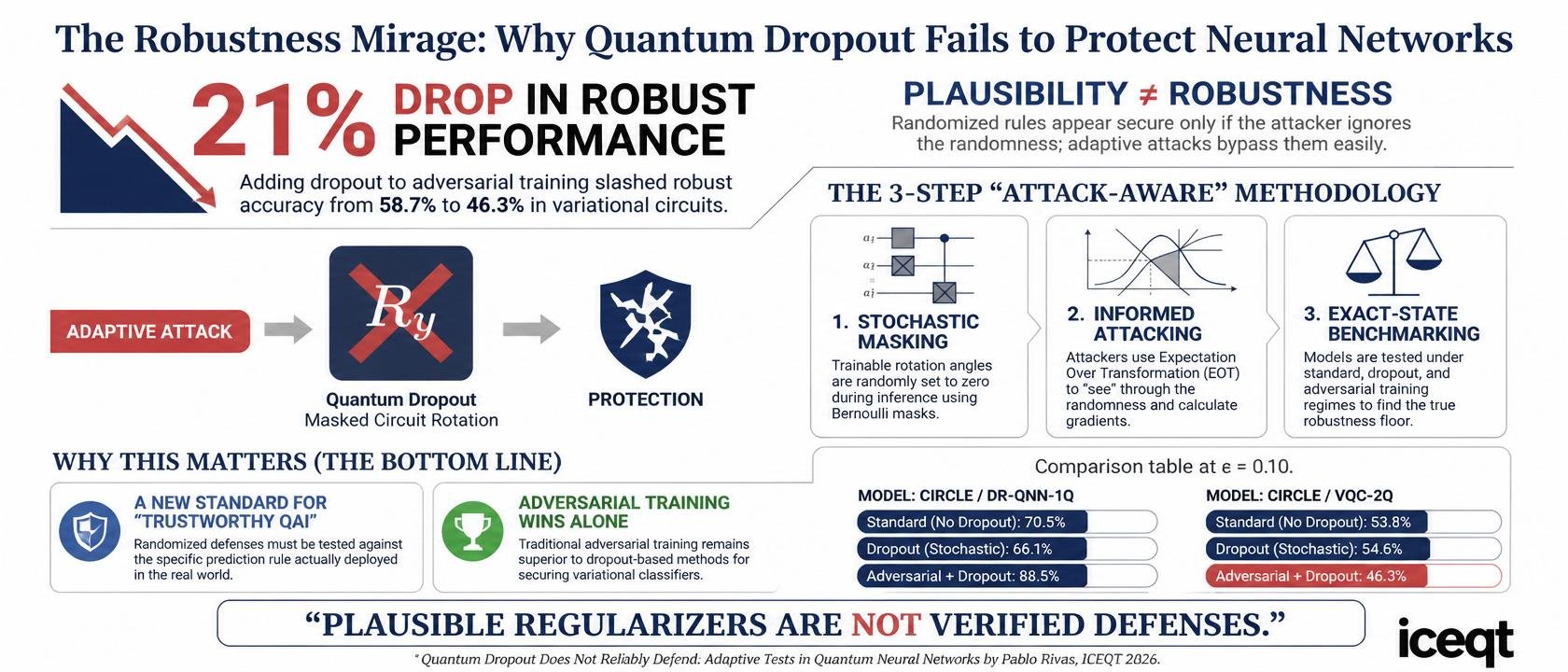
Quantum Dropout Does Not Reliably Defend: Adaptive Tests in Quantum Neural Networks

Pablo Rivas
Department of Computing Technology, School of Computer Science and Mathematics, Marist University, Poughkeepsie, New York, USA

ICE2631 · Recorded presentation (Option 3)

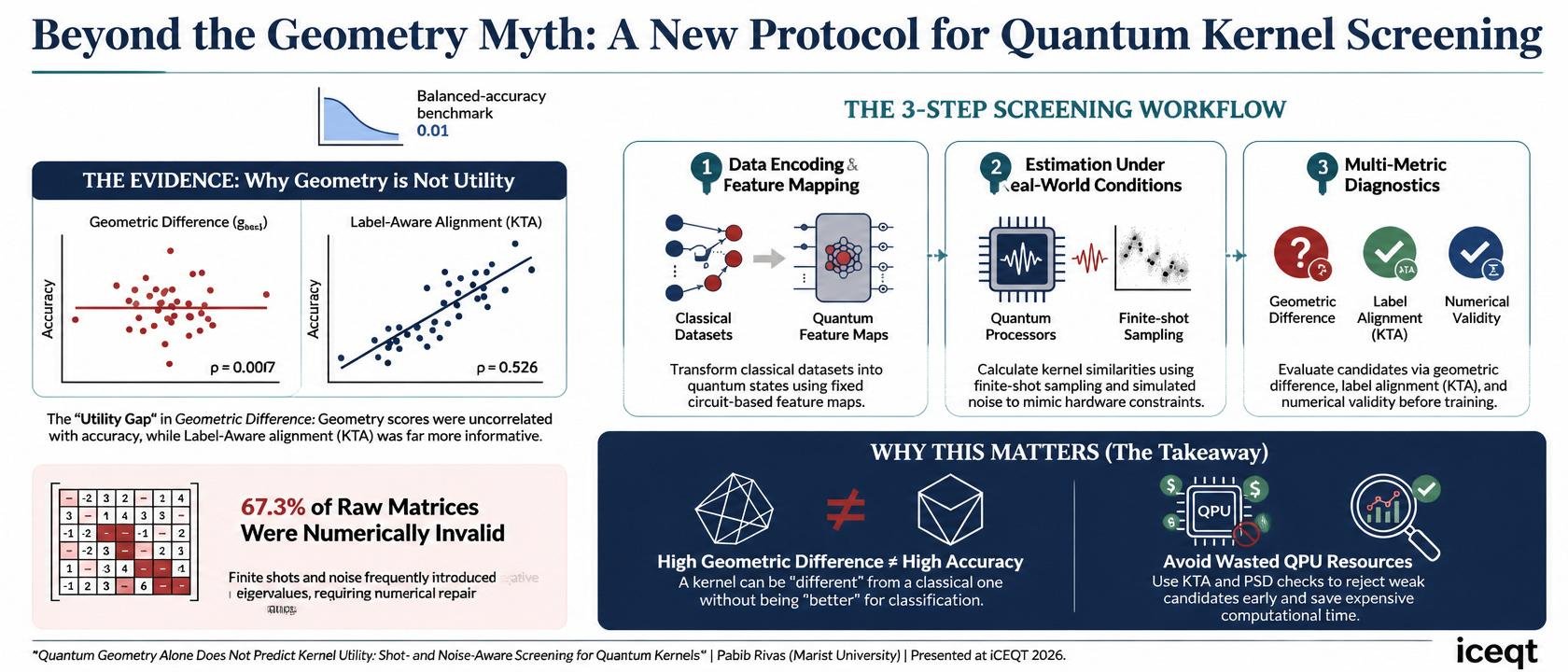
Quantum Geometry Alone Does Not Predict Kernel Utility: Shot- and Noise-Aware Screening for Quantum Kernels

Pablo Rivas
Department of Computing Technology, School of Computer Science and Mathematics, Marist University, Poughkeepsie, New York, USA

ICE2652 · Recorded presentation (Option 3)

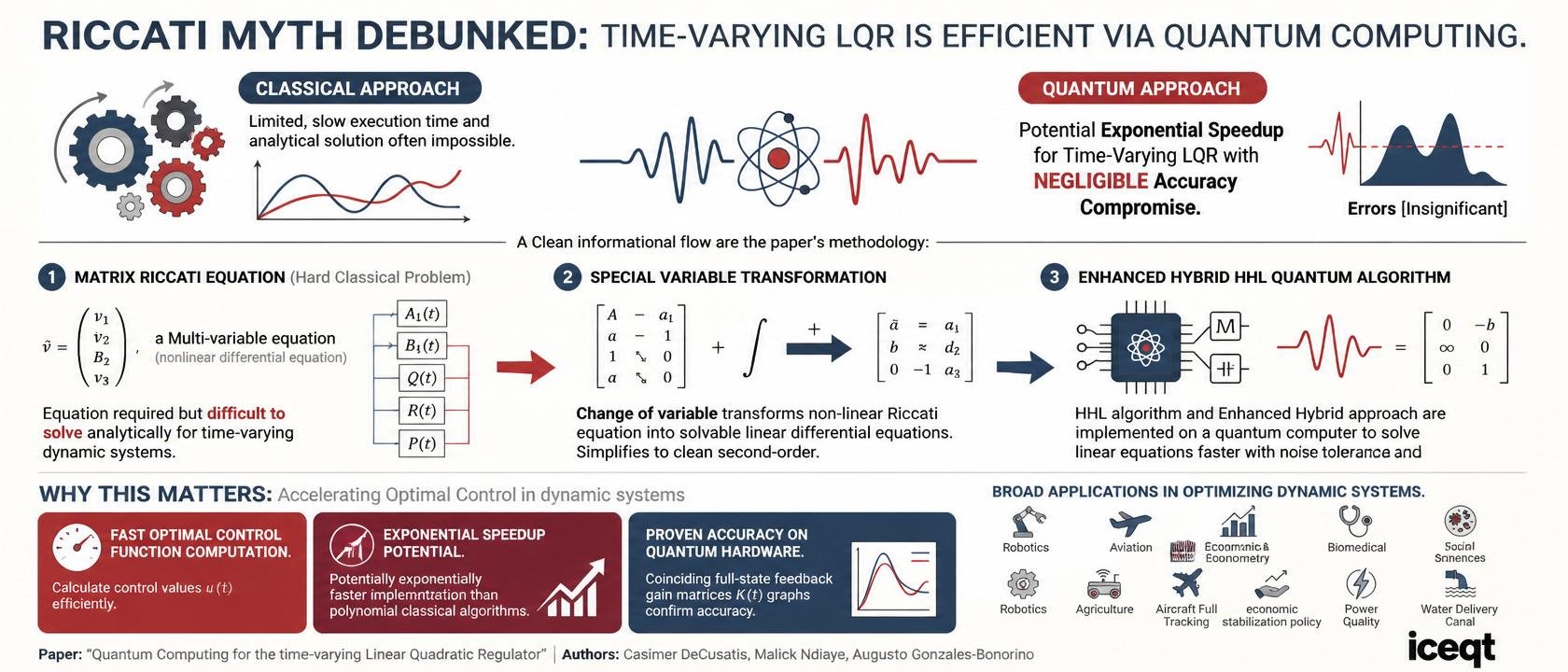
Quantum Computing for the Time Varying Linear Quadratic Regulator

Casimer DeCusatis — Marist University
Malick Ndiaye — Marist University
Augusto Gonzales-bonorino — Claremont Graduate University

ICE7401 · Official non-timed program listing

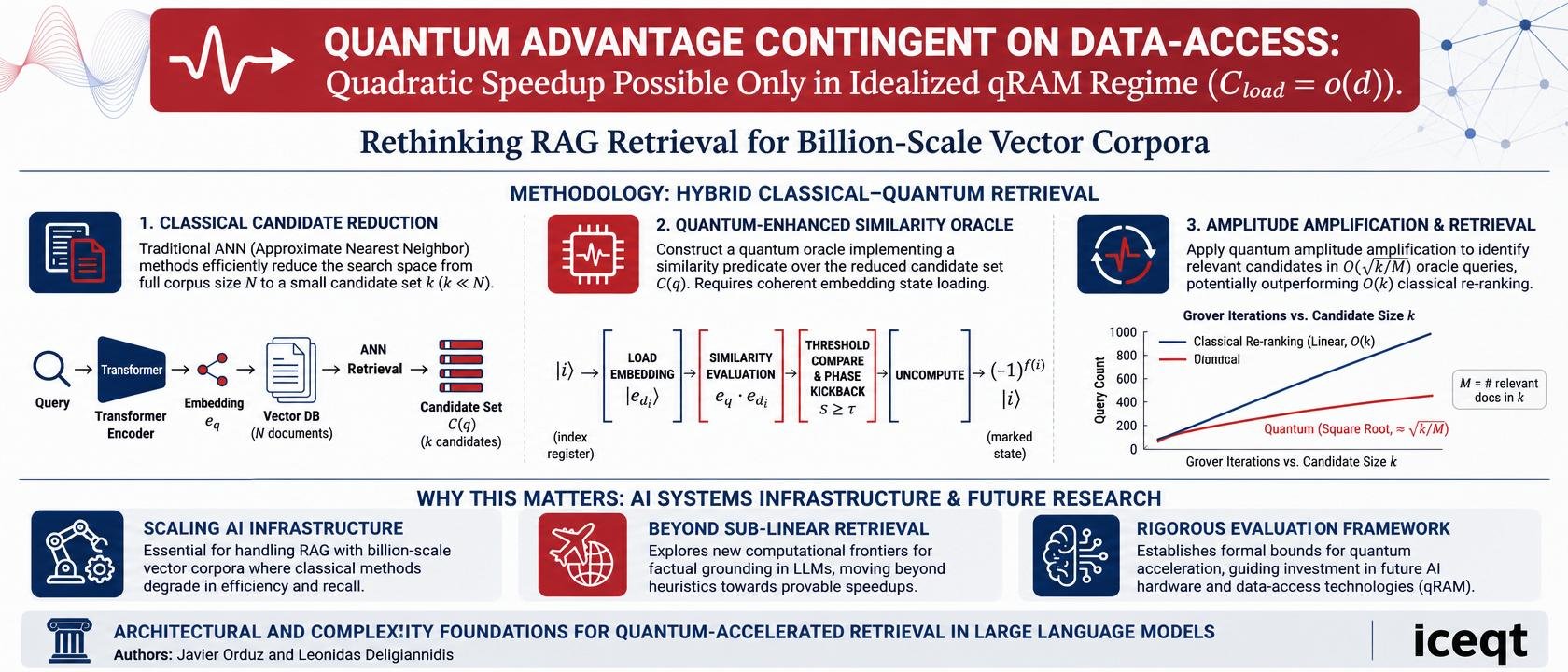
Architectural and Complexity Foundations for Quantum-Accelerated Retrieval in Large Language Models

Javier Orduz — UIMA Higher Studies Faculty of Acatlan / UNAM
Leonidas Deligiannidis — Wentworth Institute of Technology

ICE3049 · Official non-timed program listing

Graphical abstract pending

RL-Optimized Hybrid Quantum Convolutional Neural Network for Epileptic Seizure Detection in EEG Signals

Sthefanie Jofer Gomes Passo, Ronald Kuo-Hua Ho
Data Science Academic Institute, Mississippi State University, Starkville, Mississippi, USA;
University of California, Berkeley, California, USA

Official non-timed program listing

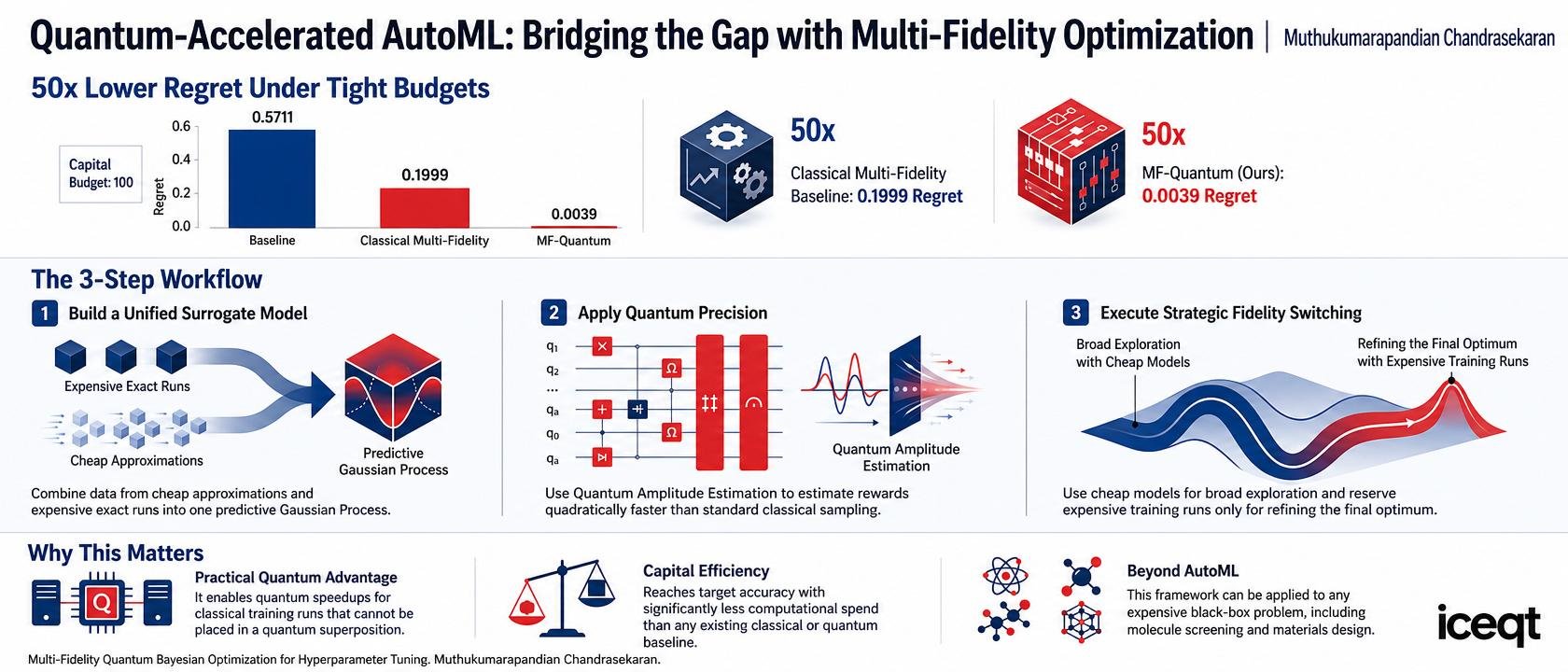
Multi-Fidelity Quantum Bayesian Optimization for Hyperparameter Tuning

Muthukumarapandian Chandrasekaran — Citiustech

ICE7403 · Official non-timed program listing

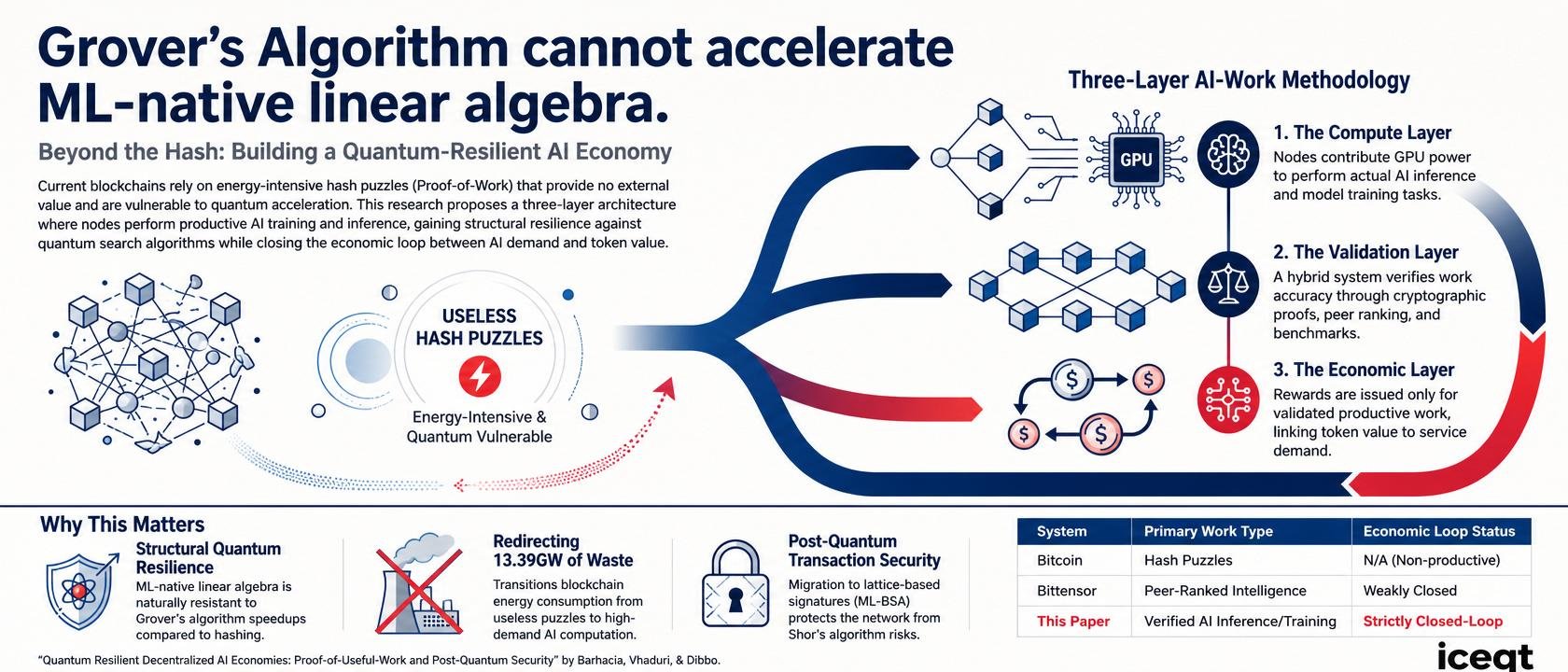
Quantum-Resilient Decentralized AI Economies: Proof-of-Useful-Work and Post-Quantum Security

Connor Barbaccia — University of Alabama
Sudip Vhaduri — University of Alabama
Sayanton Dibbo — University of Alabama

ICE7404 · Official non-timed program listing

Graphical abstract pending

Extending SeQUeNCe for Quantum Channel Environmental Noise Modeling

Brett M. Martin, Douglas D. Hodson, Torrey J. Wagner, Michael R. Grimaila
Department of Electrical and Computer Engineering, U.S. Air Force Institute of Technology, WPAFB, Ohio, USA;
Department of Systems Engineering, U.S. Air Force Institute of Technology, WPAFB, Ohio, USA

Official CSC non-timed program listing

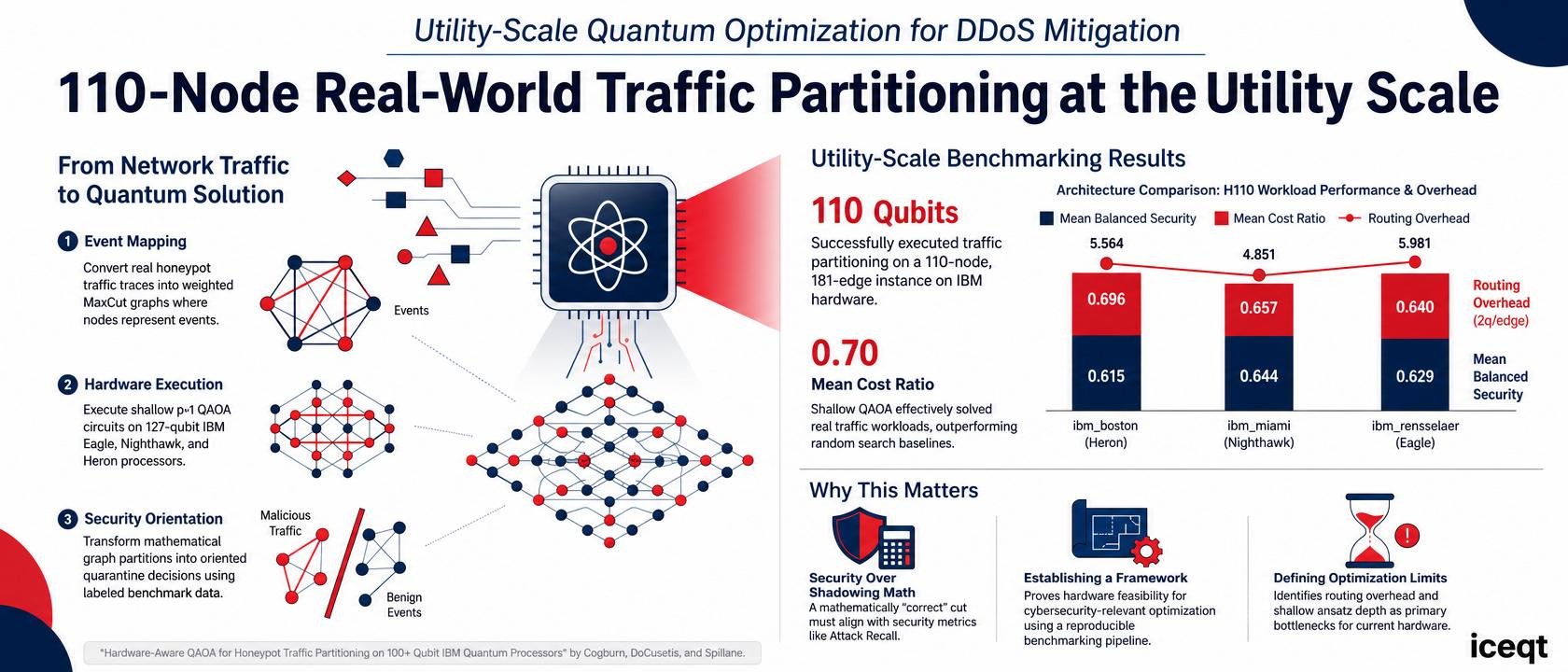
Hardware-Aware QAOA for Honeypot Traffic Partitioning on 100+ Qubit IBM Quantum Processors

Cameron V. Cogburn — Future of Computing Institute, Rensselaer Polytechnic Institute
Casimer DeCusatis — Marist University
Evan Spillane — Marist University

ICE7406 · Recorded presentation (Option 3)

PRESENTATION DETAILS PENDING

These accepted papers are included in the ICEQT website records, but their presentation details are still being confirmed with the authors and the main conference organizers.
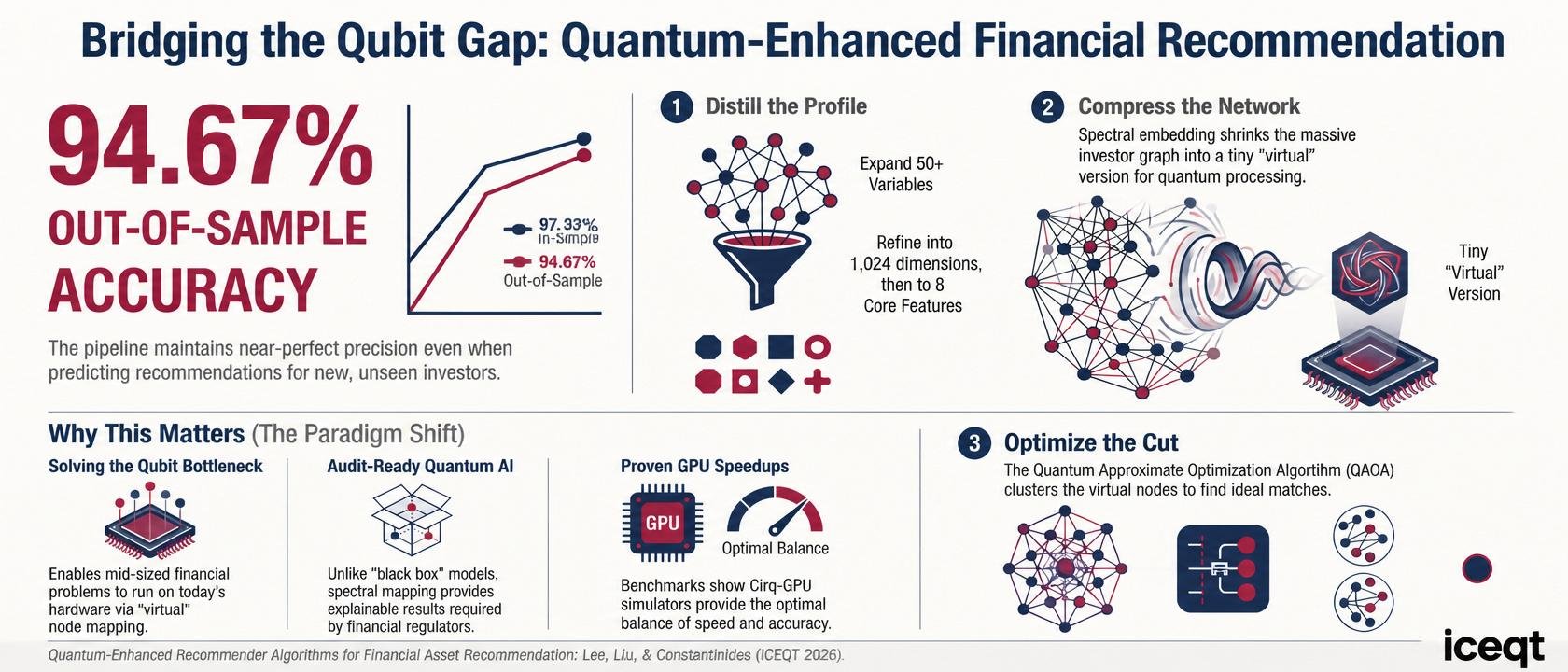
Quantum-Enhanced Recommender Algorithms for Financial Asset Recommendation: Spectral Compression, QAOA, and GPU-Based Quantum Simulation

Bernard Lee — HedgeSPA Private Limited
Chenxi Liu — Cambridge University Computing Lab
Anthony Constantinides — Imperial College London AI/Data Analytics Lab

ICE7400 · Presentation details pending confirmation

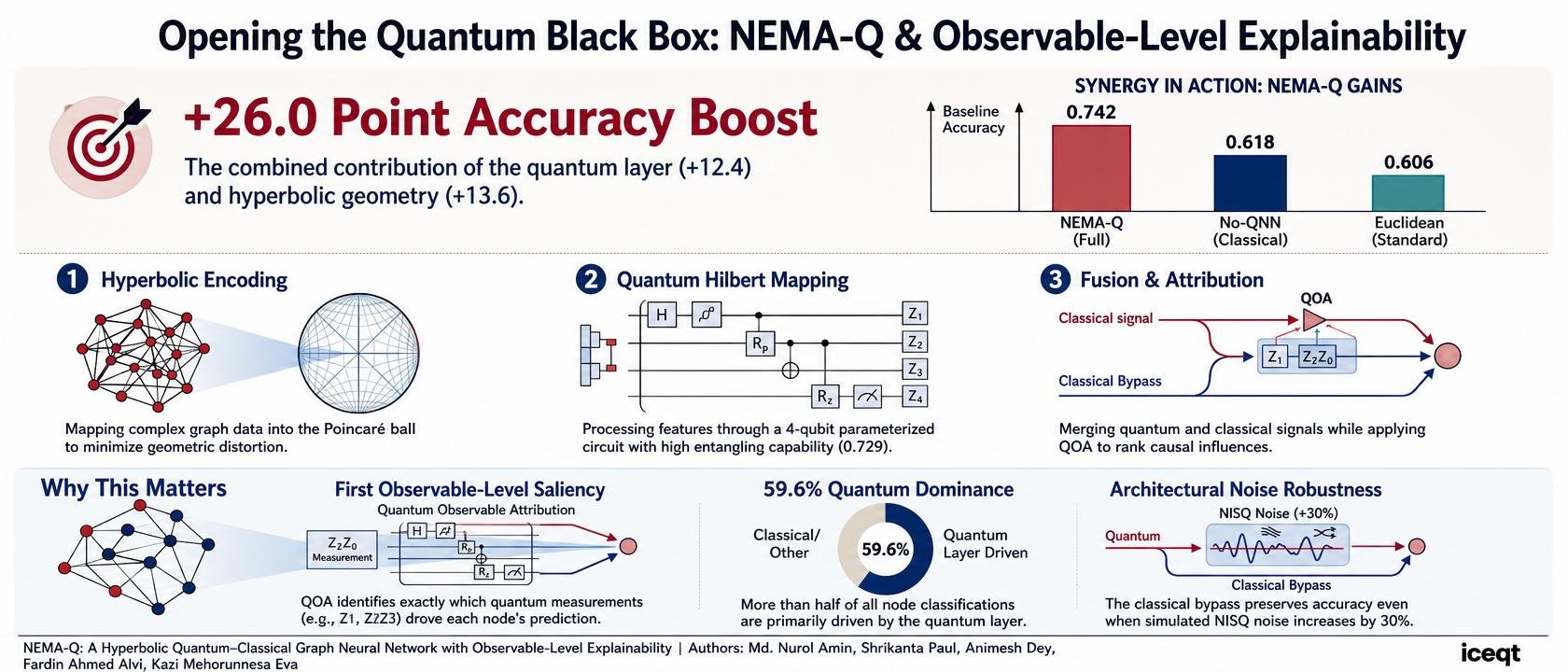
NEMA-Q: A Hyperbolic Quantum-Classical Graph Neural Network with Observable-Level Explainability

MD. Nurol Amin — Daffodil International University

ICE7405 · Presentation details pending confirmation

Call for Papers

Quantum computing is a rapidly emerging interdisciplinary research area that integrates concepts from mathematics, physics, and engineering. For scientific rigor and successful progress in the field, it demands contributions from various STEM areas.

In this context, we are pleased to announce the International Conference on Emergent and Quantum Technologies (ICEQT’26), to be held on July 20-23, 2026, in Las Vegas, NV. The conference aims to provide an opportunity for researchers in the field of quantum machine learning and machine learning researchers interested in applying AI to enhance quantum computing algorithms, to present and discuss recent advancements in their areas of expertise.

Notably, there has been an increasing interest from machine learning researchers to apply AI to the quantum computing domain, and vice versa. As a result, we cordially invite submissions of original research papers that present state-of-the-art contributions in the following areas:

Foundations of Quantum Computing and Quantum Machine Learning

  • Quantum computing models and paradigms, e.g., Grover, Shor, and others
  • Quantum algorithms for Linear Systems of Equations
  • Quantum Tensor Networks and their Applications in QML

Quantum Machine Learning Algorithms

  • Quantum Neural Networks
  • Quantum Hidden Markov Models
  • Quantum PCA
  • Quantum SVM
  • Quantum Autoencoders
  • Quantum Transfer Learning
  • Quantum Boltzmann machines
  • Theory of Quantum-enhanced Machine Learning

AI for Quantum Computing

  • Machine learning for improved quantum algorithm performance
  • Machine learning for quantum control
  • Machine learning for building better quantum hardware

Quantum Algorithms and Applications

  • Quantum computing: models and paradigms
  • Quantum algorithms for hyperparameter tuning (Quantum computing for AutoML)
  • Quantum-enhanced Reinforcement Learning
  • Quantum Annealing
  • Quantum Sampling
  • Applications of Quantum Machine Learning

Fairness and Ethics in Quantum Machine Learning


ICEQT 2026 is accepting rolling submissions until July 10, 2026. Decisions are expected approximately 7 days after submission.

Paper Submission Deadline: Rolling submissions, but no later than July 10, 2026.
PUBLISHER: Springer Nature (https://www.springernature.com/)
IMPORTANT: Many universities and institutions require their faculty and PhD students to publish papers indexed in major Science Citation Index (SCI) systems. Due to overwhelming requests from authors, we decided to choose a publisher more proactive in the SCI indexing process than the one previously announced. We are pleased to report that on June 16, Springer Nature's management informed us they will meet our indexing needs. Therefore, all accepted papers for ICEQT 2026 will benefit from enhanced and elevated SCI indexing.
INDEXATION: The published proceedings will be submitted for indexing in the CPCI, part of Clarivate Analytics' Web of Science; Scopus; EI Engineering Index; Google Scholar; DBLP; and others.

Submit Paper

The Microsoft CMT service was used for managing the peer-reviewing process for this conference. This service was provided for free by Microsoft and they bore all expenses, including costs for Azure cloud services as well as for software development and support.

For author or reviewer inquiries, please contact iceqt@rivas.ai.

Guidelines for authors

IMPORTANT DATES:

  • Paper Submission Deadline: Rolling submissions, but no later than July 10, 2026.
  • Notification of Acceptance/Rejection: Rolling notification, approximately 7 days after submission.
  • Registration: Authors of accepted papers will find the registration deadline in their acceptance notification.
  • July 20–23, 2026: The 2026 World Congress in Computer Science, Computer Engineering, and Applied Computing (CSCE'26: USA), including all affiliated federated/joint conferences.
  • September 10, 2026: Final papers for publication. Springer Nature is expected to email each author a unique upload link for the final accepted paper around this date. Authors will then have two weeks to upload the final version for publication.

Type of Submissions/Papers:

  • FULL/REGULAR RESEARCH PAPERS
    Between 12 and 15 pages using one-column Springer Nature formatting
  • SHORT RESEARCH PAPERS
    Between 6 and 11 pages using one-column Springer Nature formatting
  • POSITION/POSTER/EXTENDED-ABSTRACT RESEARCH PAPERS
    Between 2 and 5 pages using one-column Springer Nature formatting

Each paper will be peer-reviewed by two experts in the field for originality, significance, clarity, impact, and soundness. In cases of contradictory recommendations, a member of the conference program committee would be charged to make the final decision (accept/reject); often, this would involve seeking help from additional referees. Papers whose authors include a member of the conference program committee will be evaluated using the double-blinded review process. (Essay/philosophical papers will not be refereed but may be considered for discussion/panels).

venue

Luxor by MGM Resorts International.

Luxor Conference Center

hotel

address

3900 S Las Vegas Blvd, Las Vegas, NV 89119, USA
+1 (877) 386-4658

more information

Accomodation Details

Conference-rate hotel reservations are available through the official hotel booking portal on a first-come, first-served basis, subject to availability.
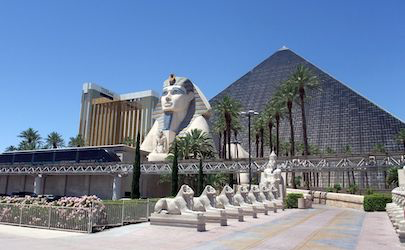
Luxor by MGM Resorts International

Reservations
800-926-4737 or 702-262-4445.
Mention the Group Code "CSREA 2026"
This is the code that the hotel will use to handle the reserved block of rooms.

details

register

Chairs

LEAD INSTITUTIONS

The ICEQT 2026 leadership team is affiliated with the following institutions.